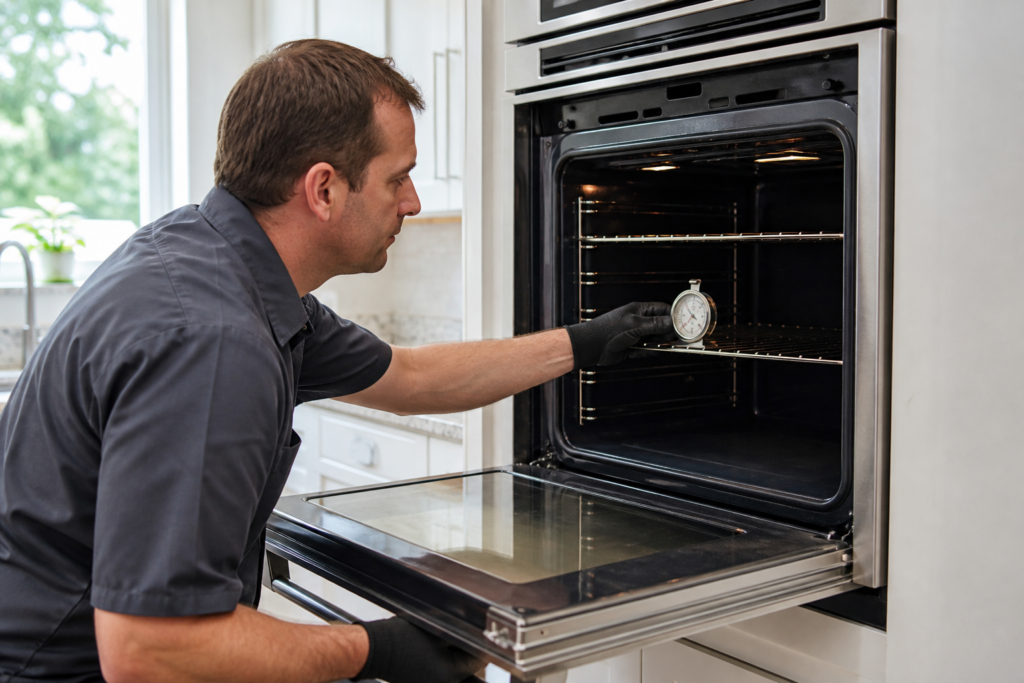

The cheapest repair is not automatically the best decision, and replacement is not automatically smarter because an appliance has several years of use.
Repair makes sense when a diagnosis points to one clearly defined problem on an appliance that is otherwise in sound shape, and replacement deserves a closer look when the fault is one of several or the installed cost of a new unit is the real number to compare. The deciding facts are what testing found, what the repair includes and what swapping the appliance would involve in your kitchen or laundry area.
The cheapest repair is not automatically the best decision, and replacement is not automatically smarter because an appliance has several years of use.
A useful Bosch repair decision starts with a diagnosis, not with a guess about a part. The outward symptom tells you where to begin, but the estimate should be based on what testing shows.
Two households can report the same problem and reach opposite conclusions. A dishwasher that stopped draining because of a blocked pump area is a very different case from one whose tub, racks and controls all show wear. The first is a contained problem with a known cause. The second is a pattern, and a repair on one part may only postpone the next visit.
That is why the diagnosis matters more than the symptom label. It tells you whether the failed item is a consumable, a component that wears with use, or a sign that the appliance is reaching the end of its practical life. Without that information, any comparison with a new model is built on a guess.
Start with the actual diagnosis and the repair scope instead of comparing a vague symptom with the retail price of a new appliance. A quote is easier to evaluate when it names the affected system and the work required. “Not cooling,” “not draining,” or “won’t heat” are symptoms; the estimate should be based on what testing showed. Ask for the finding in plain language, such as which component failed and what testing showed, so you can compare it with other quotes.
Consider appliance age, overall condition, installation cost, cabinetry fit and whether other major systems are already showing wear. Replacement math often overlooks delivery, installation, haul-away, trim work, and the possibility that a new model does not fit the existing opening exactly. Those costs matter, especially for built-in or stacked installations.
Ask whether the proposed repair solves one isolated problem or is only the first of several known issues. A well-maintained appliance with one isolated repair can be a different decision from a machine with corrosion, repeated leaks, multiple previous control issues, or several worn systems.
Also consider how the appliance is used. A household that runs a washer or dishwasher daily puts different demands on it than a vacation home, and a built-in oven in a rarely used second kitchen may have years of useful life left even if it is old.
A useful estimate should separate diagnosis, parts and labor clearly enough that you can compare the repair with the real installed cost of replacement.
| Situation | What it can point to | What you can check |
|---|---|---|
| One clear fault, rest of the appliance in good shape | Repair is often the more sensible path | Ask what testing showed and whether the part is available for your exact model |
| Same symptom has returned after earlier repairs | A deeper cause or a worn related system | Compare the earlier invoices with the new estimate |
| Visible corrosion, repeated leaks or several unrelated faults | Replacement may deserve a serious look | Ask which problems the estimate does not cover |
| Built-in unit in custom cabinetry | Replacement may need trim, cutout or utility changes | Measure the opening and compare it with new model specifications |
| Appliance is newer and the fault is isolated | Repair usually deserves priority | Check the installation date and any paperwork you kept |
An estimate moves with the diagnosis findings, the type of part involved, how hard the appliance is to reach and the exact model. A built-in unit that must be slid out of tight cabinetry takes more handling than a free-standing one. A part that is stocked for your model and revision is simpler to plan than one that must be ordered or has been superseded.
Ask the estimate to be itemized so you can see which share is diagnosis, which is the part and which is labor. If a quote only gives one total, ask for the breakdown before deciding.
A new appliance is more than the purchase price. Delivery, installation, removal of the old unit and any changes to venting, plumbing, gas or electrical connections belong in the comparison. New dimensions can differ slightly from the old ones, and in a built-in installation even a small difference can mean cabinet work.
The rating plate on the appliance carries the model and serial numbers, and either one lets a parts search start from your exact unit rather than a similar one.
Write down the full model number and a one-sentence description of what changed. If the issue comes and goes, include the condition that makes it appear. Do not move a built-in appliance, remove electrical panels, or disconnect gas components unless the service team specifically instructs you to do so.
Age alone does not decide it. Look at the diagnosed problem, the condition of the rest of the machine and whether parts are available for the exact model. An older appliance with one isolated fault and no other wear can be worth repairing.
A diagnosis turns a guess into a named problem and scope, which is what you need to compare repair against replacement. Without it you may replace an appliance that had a simple fault or repair one that is failing in several places.
Compare quotes that name the affected system, list the part and show labor separately. A quote that only says the symptom, such as not heating or not draining, gives you nothing to compare.
An error code is a starting point. The same code can describe a system condition without identifying the exact failed part.
A gas flame that suddenly changes shape can be caused by burner cleanliness and cap position, but color and stability can also point to…
An oven does not hold one exact number every second. It cycles around the setpoint, so a single thermometer snapshot can make a normal…
Share a few details and we’ll confirm an appointment. Prefer to talk? Call us and we’ll help right away.
Use the secure scheduler below to request your appointment.