Water supply, settings, and time after a reset explain many ice-maker complaints.
When a Bosch ice maker stops producing ice, the quickest checks are whether the ice maker is on, the ice bin is seated, the supply valve is open and the water line is not kinked. Allow time after a new filter or a power interruption before deciding anything is wrong, and book a diagnosis if the checks do not change the result.
An ice maker that has gone quiet is a nuisance in a busy home, and a lone symptom does not prove which part failed. Begin with observations that are safe, can be repeated, and will help if you later book a repair visit.
Below, ordinary maintenance is separated from jobs that need testing or opening the cabinet. A lock, safety switch or error message is never something to work around so the refrigerator keeps running. Notes taken now make a diagnosis quicker and more precise.
Check that the ice maker is switched on, that the bin sits where it should, and that the water supply to the refrigerator is open with no visible kink in the line. Leave the refrigerator in its usual place and do not force panels, fittings or controls. If a small change makes a difference, let one normal batch complete before you decide anything.
Following a new filter, a reset or a move, ice may take a while because the system has to refill and freeze a whole batch. Look for a pattern in when the problem shows up, whether every time or only under certain conditions. That is more useful than restarting the appliance over and over.
The manual for one Bosch refrigerator says the ice maker starts once the set temperature is reached, produces a limited amount in a day and stops when the bin is full. A motor sound about two hours in is the water valve. The same manual says no ice calls for checking that the ice maker is on, the water supply, a kinked line, low pressure and the position of the ice box.
That is a short list you can work through without opening anything, and it fits the checks you have already seen above.
| What you notice | Probable cause | What to check |
|---|---|---|
| No cubes | Ice maker switched off | Look at the setting |
| Small cubes | Poor water flow | Confirm the supply |
| After a reset | Expected delay | Let a full cycle finish |
Look to the use-and-care manual for controls specific to your model, filter access and service intervals. Clean only the parts it describes as owner-serviceable, choose the products it recommends, and seat every removable part as it was designed to sit.
Ahead of another attempt, clear any obstruction and check that nothing is limiting airflow, the water supply or door clearance. Resetting repeatedly is worth avoiding, because it can cover up an intermittent fault and leave water, heat or pressure where it does not belong.
The manual for another Bosch model says the first ice takes about a day after the refrigerator is switched on, and that water may drip from the dispenser for about the same time. The first glasses of water should be thrown away. After a power failure, the manual for one model says the fresh-food temperature has to be readjusted, which matters because the ice maker waits for the set temperature.
Bosch support recommends changing the water filter every six months, and discarding about five minutes of water and one bin of ice after a change. A filter that is overdue or poorly seated can reduce flow to the ice maker.
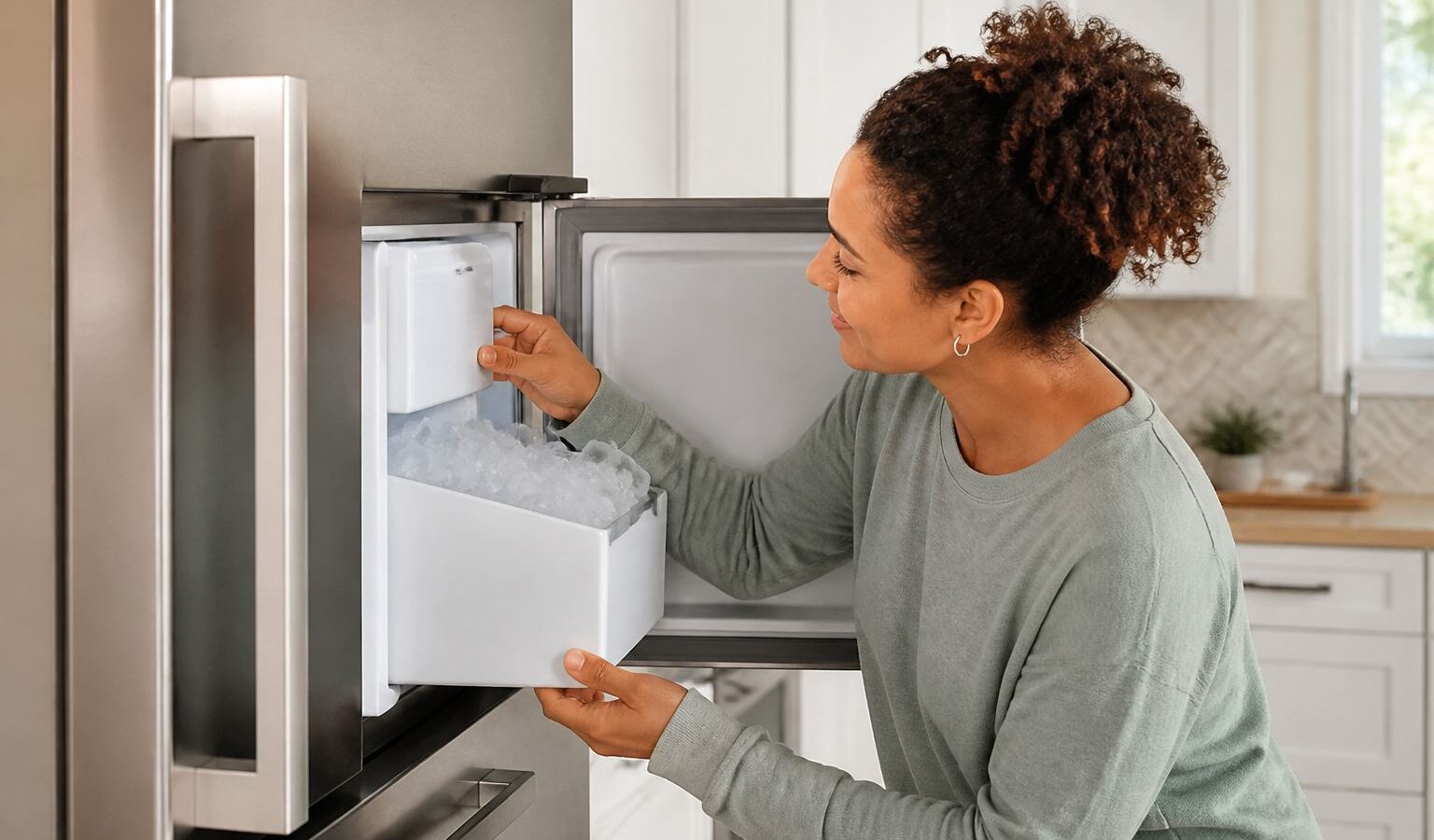
Rinse the ice cube box in warm water that stays under 140 F, skip the detergent, and dry it completely before it goes back, as the manual instructs. A bin that is not seated properly can throw off the ice maker, so recheck where it sits once it is cleaned.
Safe to attempt
Not for owners
If nothing has changed after these checks, owner-level work is finished. The refrigerator’s wiring, water valve, heaters, motors and control board need test equipment and a technician who can confirm the repair is safe.
Do not try to melt a jam or free a stuck mechanism with heat or tools. Frozen internal parts and the water valve are inside the cabinet and are for a technician to test.
If cubes are small, hollow or oddly shaped, the cause can be low flow in the supply line, and a technician can check supply pressure and the valve. Note whether the problem is no ice at all or poor quality ice.
Arrange service soon if the problem is growing worse, a breaker trips, water leaks near electrical parts, there is a hot or burnt smell, a new grinding noise starts, or a normal cycle cannot be finished. Any appliance showing a safety warning should stay off.
Mention the refrigerator’s model number, what the ice maker does or fails to do, when that began, which settings are active and how each safe check came out. A photo of a code or a short description of a sound is welcome; a removed cover to get one is not.
The manual for one model says the first ice takes about a day after switch-on. Allow that time before concluding there is a fault.
The refrigerator may need its temperature settings checked, and the ice maker starts once the set temperature is reached. Allow time and check the settings.
An overdue filter can reduce water flow, and Bosch recommends changing it every six months. Replace it as the manual shows and discard the first ice.
Looking closely is no substitute for repair, though it is the best first step. Clear up the easy conditions, keep any message that appeared, and give electrical, gas, sealed-system and internal mechanical jobs to a qualified appliance technician.
Confirm the ice maker is enabled, the bin is positioned correctly, and the refrigerator water supply is on without a visibly kinked line.
Only if there is no burning smell, smoke, sparking, gas odor, water near electricity, or other safety warning. Otherwise stop and arrange service.
An error code is a starting point. The same code can describe a system condition without identifying the exact failed part.
An oven does not hold one exact number every second. It cycles around the setpoint, so a single thermometer snapshot can make a normal…
A gas burner that clicks without lighting often deserves a careful cleaning-and-seating check before internal gas parts are suspected.
Share a few details and we’ll confirm an appointment. Prefer to talk? Call us and we’ll help right away.
Use the secure scheduler below to request your appointment.