A calm, safe walkthrough of common reasons a refrigerator stops cooling — and when to call a technician.
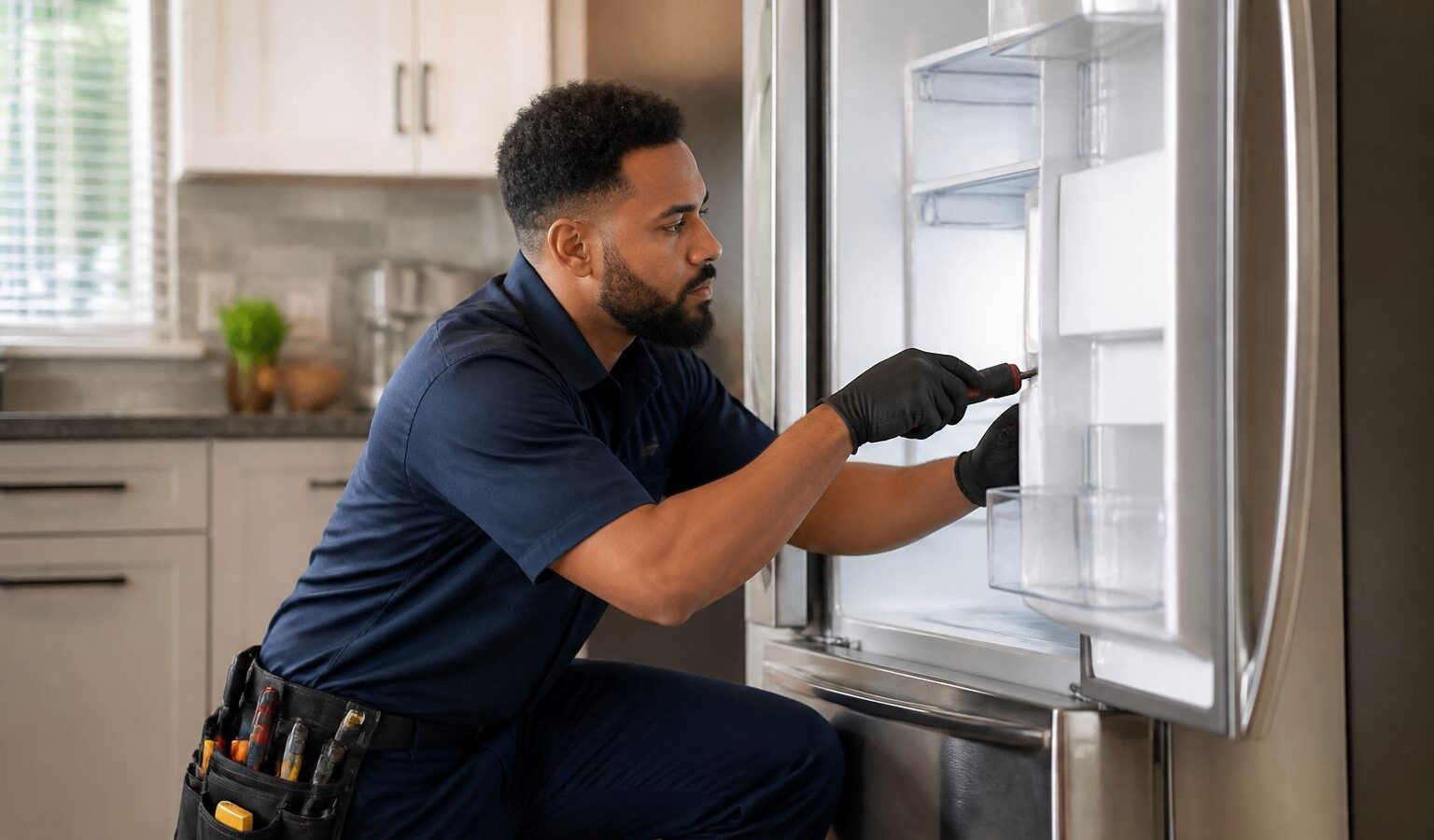
When a Bosch refrigerator is not cooling, first confirm the temperature setting, make sure the doors close fully and clear the interior air vents. If both compartments stay warm after you have allowed time for the setting to take effect, or you hear new noises with warm food, book a visit and protect the food meanwhile.
Warm shelves in a refrigerator put food at risk and throw the day off. Since one symptom never names the broken part, begin with simple observations you can repeat safely, and keep them handy for a possible repair appointment.
Below, owner upkeep is kept apart from jobs that require testing or taking the unit apart. A lock, safety switch or error message should never be defeated to keep the fridge in service. Notes you jot down now will speed up and sharpen the diagnosis.
Check that nobody has turned the controls warmer, that both doors shut all the way, and that groceries are not pushed against the interior air vents. Leave the refrigerator where it stands and do not force any panel, fitting or control. After any small adjustment, give the fridge one ordinary stretch of running before you judge the outcome. Closing the door lightly against the gasket lets you see whether the seal meets the cabinet along its whole edge.
Write down if the freezer is cold while the fresh-food side is warm, because that combination often hints at an airflow or defrost problem. Also track when it happens: constantly, only with a certain load or setting, or after the fridge has run for some time. That pattern tells a technician more than repeated unplugging.
| What you see | Probable cause | What to try |
|---|---|---|
| Refrigerator runs warm | Vents obstructed | Free up the interior vents |
| Both compartments warm | Power or cooling-system fault | Verify the outlet and the control settings |
| Ice or frost building up | Restricted airflow | Confirm the doors shut fully |
The manual for one Bosch refrigerator lists factory settings of 39 degrees F in the fridge and 0 degrees F in the freezer, with the fridge adjustable between 34 and 44 degrees, and tells you to allow several hours before loading food. Bosch US advises 37 to 39 degrees F for the fridge and 0 degrees F for the freezer. A change made recently has not had time to show.
It also describes modes: Super Cool sets 34 degrees F and ends automatically, Super Freeze sets minus 8 for up to six hours, and Eco Mode sets 44 and 5 degrees F for vacations. A fridge that feels warmer than usual may be in a mode, or the controls may have been bumped.
Turn to the use-and-care manual for the controls, filter location and service intervals of your model. Clean just the parts it calls user-serviceable, with the products it recommends, and set each removable piece back in its designed position.
Ahead of another attempt, remove anything that is in the way, lighten a packed load, and check that airflow, the water supply and door clearance are unobstructed. Resetting over and over is a poor habit: it can mask an intermittent fault and leave water, heat or pressure where it does not belong.
That manual says that after a power failure the fresh-food temperature must be readjusted, so a fridge that was cold before an outage may need its setting restored. The manual for a dispenser model describes a door alarm that sounds after the door is open more than one minute and repeats every 60 seconds for five minutes, and a temperature alarm that appears when the interior gets too warm.
If an alarm sounds, look at whether a door is ajar, whether food is blocking the seal and what the display says. A fridge with a freezer that is cold and a fresh-food side that is warm is a useful detail to report, since it points a technician to airflow rather than the whole system.
Owner-safe checks
Technician work
When the basic checks do not move the symptom, stay within owner care. Cabinet wiring, heating circuits, pumps, motors, sealed refrigerant lines, gas fittings and control boards require proper test equipment and a technician who can confirm a repair is safe.
Book service soon if things are getting worse, a breaker trips, there is leaking close to electrical parts, a hot or burnt smell, a fresh grinding noise, or the appliance cannot finish a normal cycle. Keep away from running anything that is showing a safety warning.
If you call for service, mention what the display shows, whether any mode is active, which compartment is warm and how long it has been since the doors were last opened for long. Do not try to reach fans, the compressor area or any sealed lines, which are outside owner care.
Have the model number ready along with the precise symptom, the date it started, the settings in use and what the safe checks turned up. Snapping a picture of a code, or describing a sound in a few words, is useful too, but never take off a cover to get either.
The manual for one Bosch refrigerator says to allow several hours before loading food. Judging the result sooner can give a misleading read.
That pattern can point to blocked air vents or an airflow or defrost issue. Clear the vents, check the door seals and, if it continues, describe the pattern when booking.
Keep doors closed as much as possible and move perishable items to a working cooler or other refrigerator. Discard anything you are unsure about.
Close observation cannot stand in for a repair, yet it is the right place to begin. Deal with the simple conditions, keep any error details that appear, and hand repairs involving electricity, gas, a sealed system or the machine’s internals to a qualified appliance technician.
Losing cooling, building frost, or pooling water? We diagnose Bosch refrigerator faults and restore reliable, efficient cooling.
Bosch refrigerator diagnostics and repair — cooling loss, frost, leaks and dispenser faults.
Confirm that the controls have not been set warmer, the doors close fully, and food is not blocking interior air vents.
Only if there is no burning smell, smoke, sparking, gas odor, water near electricity, or other safety warning. Otherwise stop and arrange service.
A gas flame that suddenly changes shape can be caused by burner cleanliness and cap position, but color and stability can also point to…
The location and timing of a washer leak usually narrow the possibilities faster than the size of the puddle.
A dishwasher leak should be described by when and where it appears. Water at the front during filling is different from water under the…
Share a few details and we’ll confirm an appointment. Prefer to talk? Call us and we’ll help right away.
Use the secure scheduler below to request your appointment.