A dryer drum can turn normally while heat is missing, which means 'it runs' does not rule out an electrical or heating problem.
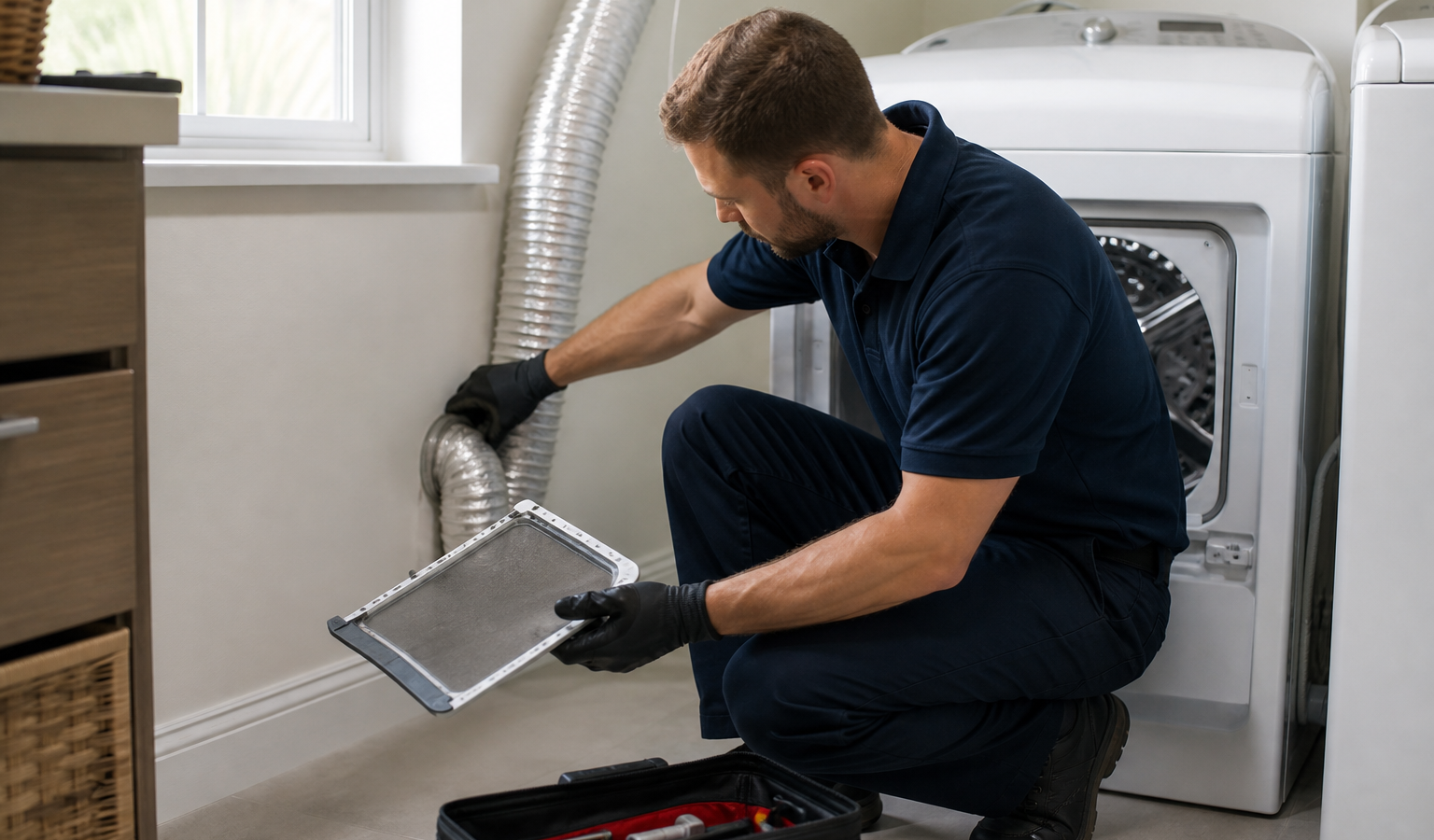
When a Bosch dryer turns but does not heat, start with the basics you can see: confirm the cycle is meant to heat, clean the lint filter and make sure the air inlet and exhaust path are not blocked. If the dryer still runs cold or lukewarm, heating and power faults need testing and should be left to a technician.
A dryer drum can turn normally while heat is missing, which means 'it runs' does not rule out an electrical or heating problem.
A useful Bosch repair guide should narrow the problem before it narrows the part. Start with what you can observe from the outside: temperature, water level, sound, cycle stage, control response, loading, airflow, or the exact error shown on the display. Those details are more reliable than a guess made from one symptom.
The manual for one Bosch dryer ties long drying times to a dirty lint filter, a dirty heat exchanger, an obstructed air inlet on the front of the dryer, or an ambient temperature above 95 F. These are airflow and environment issues, not failed heating parts, and they can make clothes seem to get little heat.
That manual describes a condensation design, in which moisture is drawn out and drained rather than vented outdoors, and says the dryer pumps condensate through a drain hose to a standpipe or drain. If your dryer is a vented model, the exhaust path replaces that step, so check which type you have.
Confirm the selected cycle is supposed to provide heat and is not an air-only program. An air-only or low-heat program will not warm clothes the way a regular cycle does, so rule out the program selection first.
Check the exhaust first because severe restriction can affect temperature behavior.
For electric dryers, do not assume a running motor proves the full power supply is present. On an electric dryer, a drum that turns only shows the motor is powered, so check the household breaker if there is no warmth at all.
The same manual notes that low temperatures in the room can prolong drying, so a cold basement or garage can make a working dryer feel weak.
Make one change at a time. If you reset settings, clean several components, and change the load all at once, you lose the information about which condition mattered.
Internal heating elements, thermal controls, gas ignition components and line-voltage testing are technician work.
Heating elements, thermal controls and gas ignition parts are inside the dryer and are tested with meters and the cabinet opened. A technician can tell whether the heating circuit is receiving power and whether the safety controls are doing what they should, which you cannot judge from the drum alone.
If you smell something hot or burnt, or the dryer trips a breaker, stop using it. Those are signs to leave the dryer off until it has been checked.
A technician can then test the relevant electrical, mechanical, water, gas, or refrigeration system instead of starting with a generic parts guess.
| What you notice | What it can point to | What you can check |
|---|---|---|
| Clothes are damp and barely warm | Blocked filter, heat exchanger or air path | Clean the lint filter and check the front air inlet |
| Drying time is very long but heat is present | Airflow or moisture sensing | Clean the filter and the sensor bars as described in the manual |
| Drum turns, no warmth at all | Heating or power fault | Stop and book diagnosis |
| Water-related indicator lit | Drain path | Check the drain hose for kinks or blockage |
| Only one program is cold | Program choice | Check the dryness level and program |
For the model above, the lint filter is cleaned before or after each drying process, and a clogged filter is rinsed in warm running water and dried thoroughly. Lint can also collect in the filter area and be removed with a vacuum. The heat exchanger is cleaned about once a month under normal conditions, depending on load, and the manual says to let the dryer cool and use only warm water, with no hard or sharp objects.
Unplug the dryer before cleaning the interior, the sensor or the condenser, as Bosch support advises.
Automatic programs are controlled by sensors, and the stainless-steel moisture bars next to the lint filter can pick up a film of limescale or detergent residue that impairs drying. Wiping them with a cloth and a little white vinegar once a month is the manual’s suggestion. A coated sensor can make a dryer stop early or run long, which feels like a heat problem even when the heater is fine.
Write down the full model number and a one-sentence description of what changed. If the issue comes and goes, include the condition that makes it appear. Do not move a built-in appliance, remove electrical panels, or disconnect gas components unless the service team specifically instructs you to do so.
Clean the lint filter, check the heat exchanger and the air inlet, and make sure the selected program uses heat. If all of that is clear and clothes are still damp, a heating or control fault needs testing.
A dirty filter extends drying time and uses more energy, according to the manual, so it can make a dryer seem weak. It does not explain a dryer that produces no warmth at all.
The manual describes it as a user maintenance task on its model, with the dryer cooled and only warm water. Follow your own manual and unplug the dryer first.
An error code is a starting point. The same code can describe a system condition without identifying the exact failed part.
A gas burner that clicks without lighting often deserves a careful cleaning-and-seating check before internal gas parts are suspected.
An oven does not hold one exact number every second. It cycles around the setpoint, so a single thermometer snapshot can make a normal…
Share a few details and we’ll confirm an appointment. Prefer to talk? Call us and we’ll help right away.
Use the secure scheduler below to request your appointment.