Preheat complaints are easiest to evaluate when you compare the same mode, setpoint and starting condition.
A slow preheat is easiest to judge by timing the same mode to the same temperature from a cold start a few times. Higher temperatures and some modes naturally take longer, so book service when the time has clearly grown, the oven never reaches the setpoint or one mode behaves very differently from the rest.
Preheat complaints are easiest to evaluate when you compare the same mode, setpoint and starting condition.
A useful Bosch repair guide should narrow the problem before it narrows the part. Start with what you can observe from the outside: temperature, water level, sound, cycle stage, control response, loading, airflow, or the exact error shown on the display. Those details are more reliable than a guess made from one symptom.
The manual for one Bosch 800 Series built-in oven says that setting a higher temperature does not shorten preheat time and that a higher target takes longer than a lower one, for example 425 F compared with 350 F. It also says preheat takes longer if the home’s electrical supply is under 240 volts. So the setpoint and the supply to the house both belong in your comparison.
The same manual says the lower bake element is hidden under the oven bottom, so preheat can differ from an older oven with an exposed element. A new oven that seems slower than the old one may simply be heating differently.
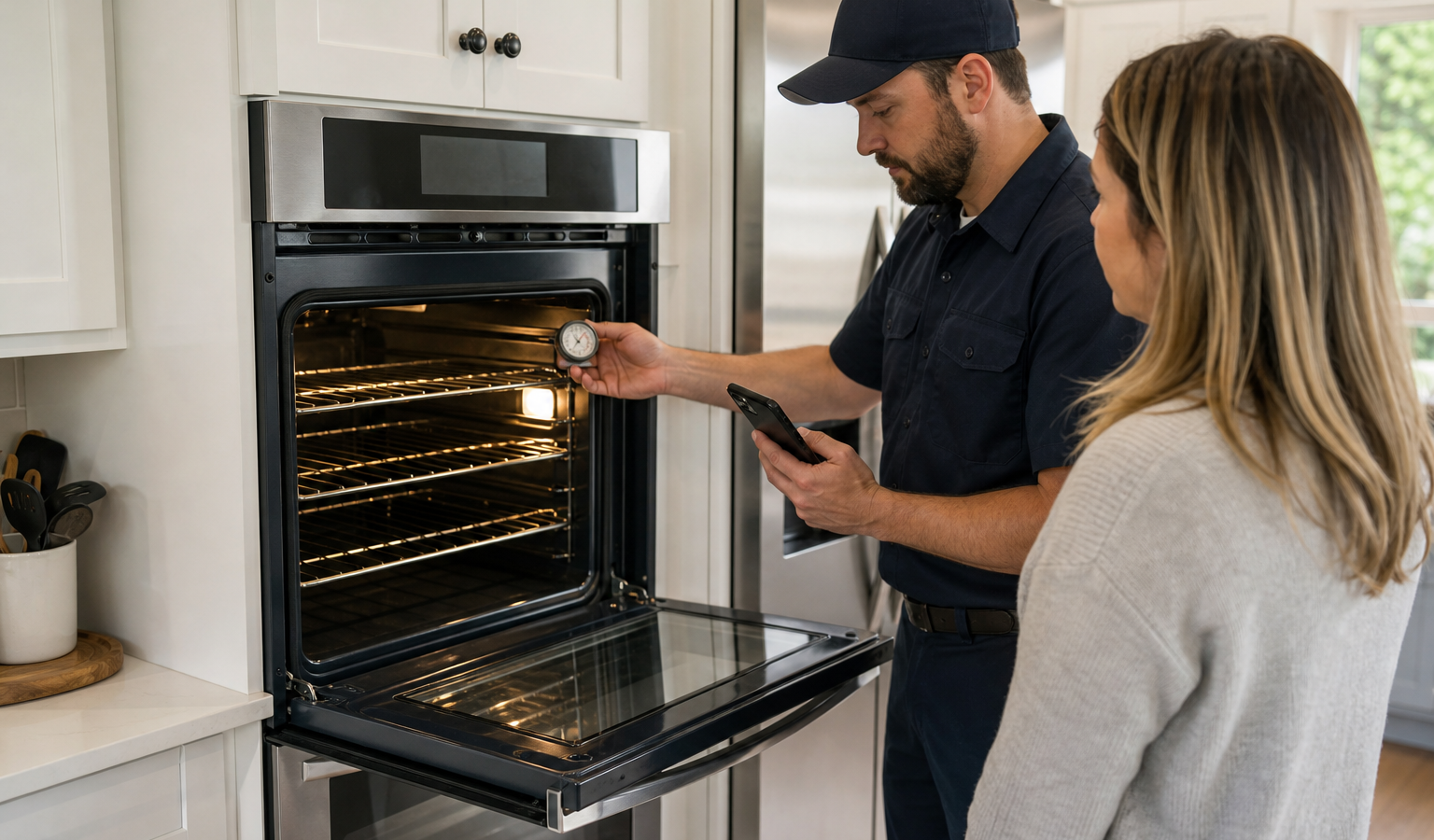
Start from a cold oven and time the same mode to the same temperature on more than one occasion. Use the same rack position and an empty oven, because pans and stones absorb heat and change the timing.
Make sure the door closes cleanly and avoid repeated opening during the test. A door gasket that is out of place or a rack that stops the door from closing fully lets heat escape and lengthens the wait.
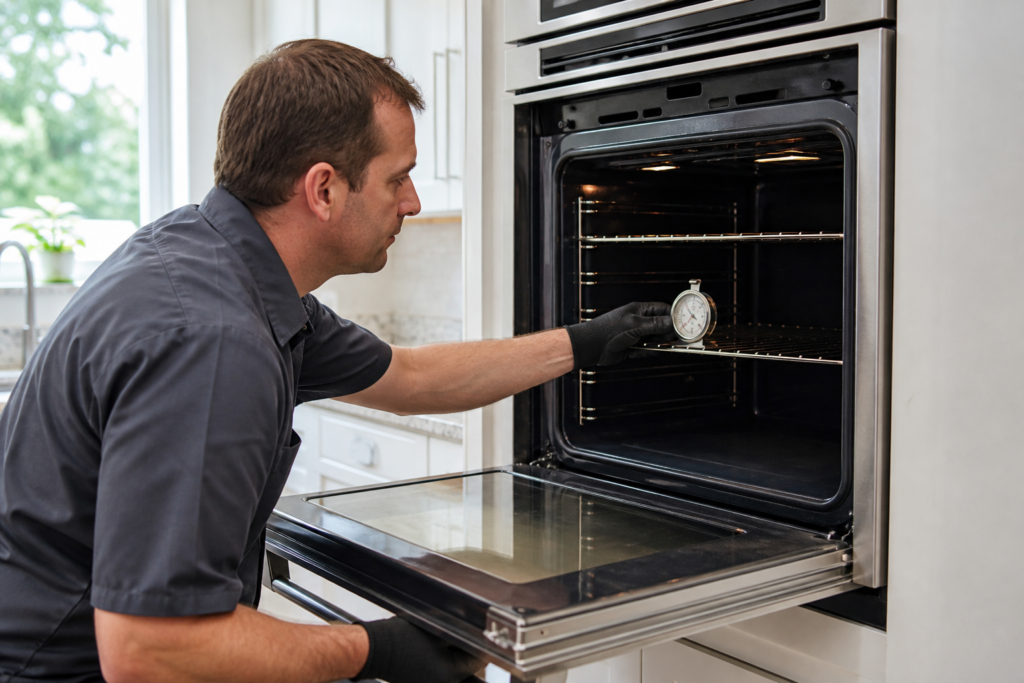
Do not judge the entire oven from one instant thermometer reading because temperature naturally cycles.
Make one change at a time. If you reset settings, clean several components, and change the load all at once, you lose the information about which condition mattered.
A major increase in preheat time, failure to reach setpoint or one mode behaving very differently from the others warrants heating, sensing and power checks.
A technician will look at whether the oven heats at all, whether it senses its own temperature correctly and whether the supply at the oven is adequate. A slow oven that still reaches and holds the setpoint is a different case from one that stalls partway, and your timings help show which one you have.
Do not remove the oven bottom or any panels to look at the hidden element. It is covered on purpose, and owner care stops at the cavity and the door.
A technician can then test the relevant electrical, mechanical, water, gas, or refrigeration system instead of starting with a generic parts guess.
| What you observe | What it can point to | What you can check |
|---|---|---|
| Longer preheat only at a high setpoint | Normal behavior for a higher target | Repeat the test at a lower setpoint |
| Preheat is slower than on an old oven | Hidden bottom element and different design | Compare against the manual rather than memory |
| Only one mode is slow | A mode-specific heating or control problem | Time the same temperature in bake and in convection |
| Slow after a household electrical change | Supply to the oven | Mention it when you book |
| Never reaches the setpoint | Heating, sensing or power | Stop testing and arrange diagnosis |
The manual lists preheat for Bake, Convection Bake, Convection Multi-Rack, Pizza, Broil, Convection Broil and Warm, and says preheat is not used for Roast, Convection Roast and Proof. If you are timing a roast mode and see no preheat, that is by design. Fast Preheat is offered for several modes, including Bake and Convection Bake, but not for Broil, Convection Broil, Proof or Warm.
Preheating is also not necessary for meats, poultry, casseroles or frozen foods, and when broiling the manual says to preheat for about three to four minutes and no more than five.
One long preheat can come from a door left open, a cold kitchen or a heavy dish in the oven. Three timings under the same conditions show whether the problem is steady. A technician can then compare your results with how the oven should perform for its model.
Write down the full model number and a one-sentence description of what changed. If the issue comes and goes, include the condition that makes it appear. Do not move a built-in appliance, remove electrical panels, or disconnect gas components unless the service team specifically instructs you to do so.
It depends on the mode and the target temperature, and a higher setpoint takes longer. If the time has increased for the same setpoint and mode, that change is worth a diagnosis.
On the manual for one Bosch oven it does not. It is not available for Broil, Convection Broil, Proof or Warm, so check your own manual for the list.
Many baked foods benefit from preheating, but manuals describe it as unnecessary for meats, poultry, casseroles and frozen foods. Follow your manual and recipe.
An error code is a starting point. The same code can describe a system condition without identifying the exact failed part.
A gas burner that clicks without lighting often deserves a careful cleaning-and-seating check before internal gas parts are suspected.
An oven does not hold one exact number every second. It cycles around the setpoint, so a single thermometer snapshot can make a normal…
Share a few details and we’ll confirm an appointment. Prefer to talk? Call us and we’ll help right away.
Use the secure scheduler below to request your appointment.