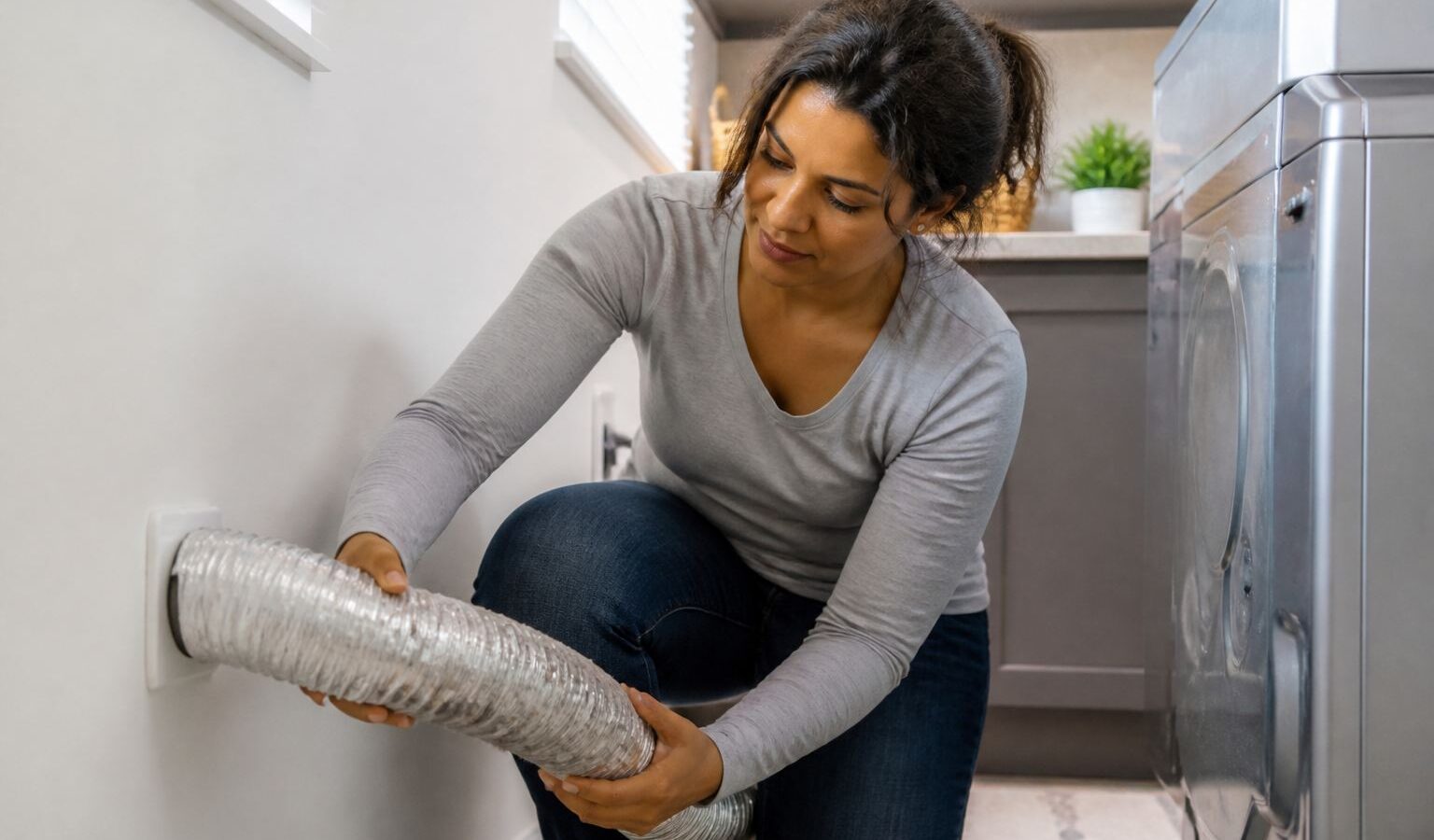
Clean venting improves drying performance and is an important home-safety habit.
Dryer vent care comes down to keeping air moving out of the machine: clean the lint filter every load, keep the visible vent path straight and uncrushed, and stop using the dryer if you smell burning. On a Bosch dryer the manual also points to the air inlet and the ambient room conditions, so check those before assuming something is broken.
Long dryer cycles upset the laundry rhythm of a whole home, and the urge is to name a broken part right away. A single symptom seldom justifies that. Collect observations first: ones that are safe, that you can repeat, and that a technician could use later.
The sections below treat routine upkeep and work needing tests or a teardown as two separate things. A lock, safety switch or error message is there for a reason, so never defeat one to keep drying. Notes written today save time during any diagnosis.
Make emptying the lint screen part of every load. Check just the vent section and the outdoor flap you can get to with no tools. Keep the dryer where it normally stands, and never force a panel, fitting or control. If a small tweak changes how it behaves, run one normal cycle to see whether the change holds before drawing any conclusion.
Cycles that drag on, laundry that comes out hot, or lint showing at the outside end of the duct all suggest restricted airflow worth dealing with. Notice when it happens: every load, only with certain loads or settings, or only after the dryer has been running a while. That detail tells you more than starting the machine again and again. On a condensation dryer, long cycles can also trace back to the heat exchanger instead of a vent run.
| Signal | Response | Don’t |
|---|---|---|
| Filter packed with lint | Empty it after each load | Drying with no filter fitted |
| Clothes take longer | Inspect the vent you can see | Squashing the hose |
| Smell of burning | Stop using the dryer | Trying one more load |
The manual for one Bosch dryer says to clean the lint filter before or after each drying process and notes that a dirty filter extends drying time and increases energy use. It also says lint collects in the filter area and can be removed with a vacuum cleaner, which is an easy owner task as long as nothing inside the cabinet is touched. A heavily clogged filter can be rinsed under warm running water, but it must dry thoroughly before it goes back in.
That manual lists an obstructed air inlet on the front of the dryer as another reason for a drying time that is too long. Keep the front of the machine clear of laundry baskets, rugs and stored items.
Model-specific controls, filter access and service intervals are in the use-and-care manual, so open it first. Only clean parts it describes as owner-serviceable, use the cleaners it recommends, and put each removable part back the way it was designed to sit.
Another cycle can wait until you have cleared blockages, trimmed an oversized load, and confirmed that air, water and the door can all move or open freely. Repeated resets tend to hide a fault that comes and goes, and may leave heat, water or pressure sitting where it should not.
The same manual gives recommended operating conditions of about 41 to 95 degrees F and relative humidity under 95 percent, and says low temperatures may prolong drying times. A dryer in a cold utility area may simply run longer than one in a warm room, and a long cycle there is not automatically a fault.
Not every dryer works the same way. The model in that manual is a condensation dryer, which collects moisture in a heat exchanger and pumps the water out through a drain hose. The manual recommends cleaning the heat exchanger about once a month under normal conditions, following its own steps, and unplugging the dryer first. Check whether your model is a condensation type or uses an exterior vent before deciding which of these steps applies.
Fine to do yourself
For a technician
Beyond the filter and the visible vent, the owner’s job is done if nothing has improved. Anything involving the dryer’s heater circuit, motor, wiring, gas supply, sealed refrigerant parts or control board needs test gear and a technician who can confirm the fix is safe.
Call for a visit soon when the dryer is slipping further, trips a breaker, leaks close to electrical parts, smells scorched or hot, starts a new grinding sound, or can no longer finish an ordinary load. If it shows a safety warning, leave it switched off.
Tell them which model you own, what the dryer does, when that began, which settings were picked, and how the safe checks above turned out. Photographing a displayed code, or describing a sound in a sentence, also helps; removing a cover to get either never does.
The manual for one Bosch dryer says before or after each drying process. Make it a habit so that a long cycle never starts with a full filter.
Not by itself. Warm laundry and a warm cabinet are expected after a cycle, but clothing that comes out unusually hot together with long cycles is worth noting as a possible airflow restriction.
Only the accessible filter area, as the manual describes. Anything that needs the cabinet opened, or a long hidden duct run, should be left to a technician.
Noticing details will not fix a dryer, but it is where sensible troubleshooting starts. Settle the easy conditions, keep any code or message worth passing on, and entrust electrical, gas, sealed-system and internal mechanical jobs to a qualified appliance technician.
Clean the lint screen every load and inspect only the accessible portion of the vent path and exterior flap.
Only if there is no burning smell, smoke, sparking, gas odor, water near electricity, or other safety warning. Otherwise stop and arrange service.
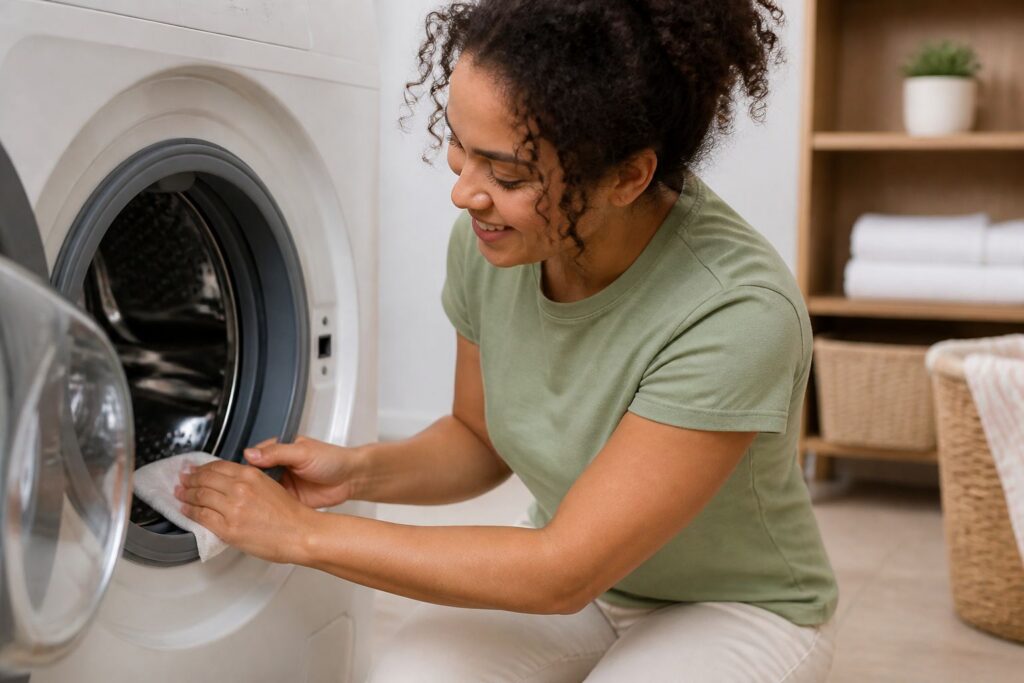
Simple gasket, drawer, and drum care helps prevent musty odors in front-load washers.
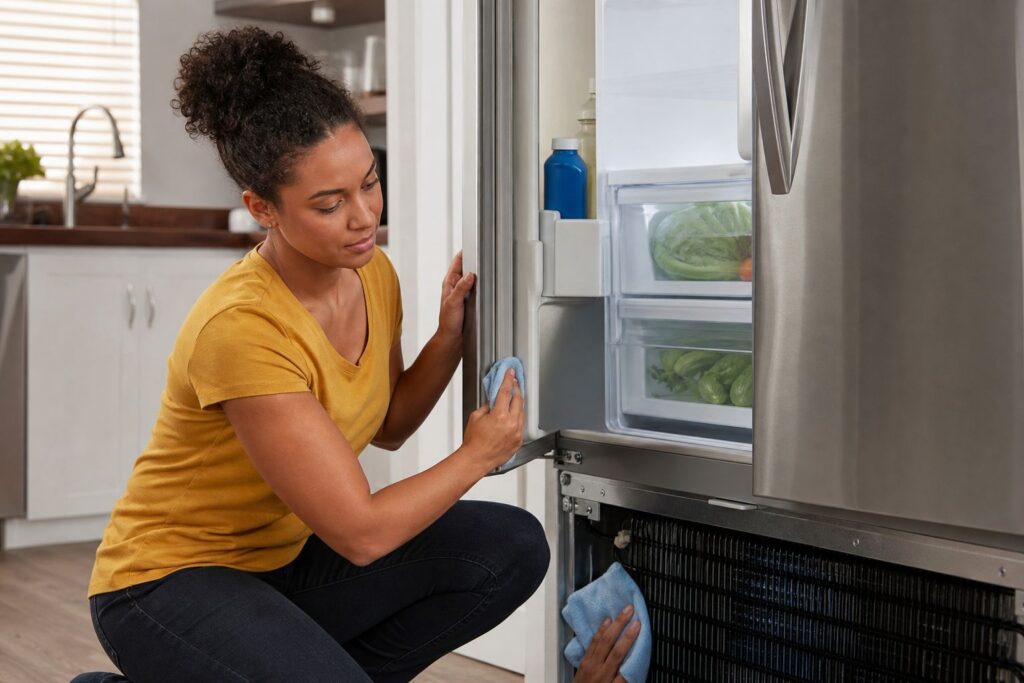
Clear airflow and clean door seals help a refrigerator run efficiently.
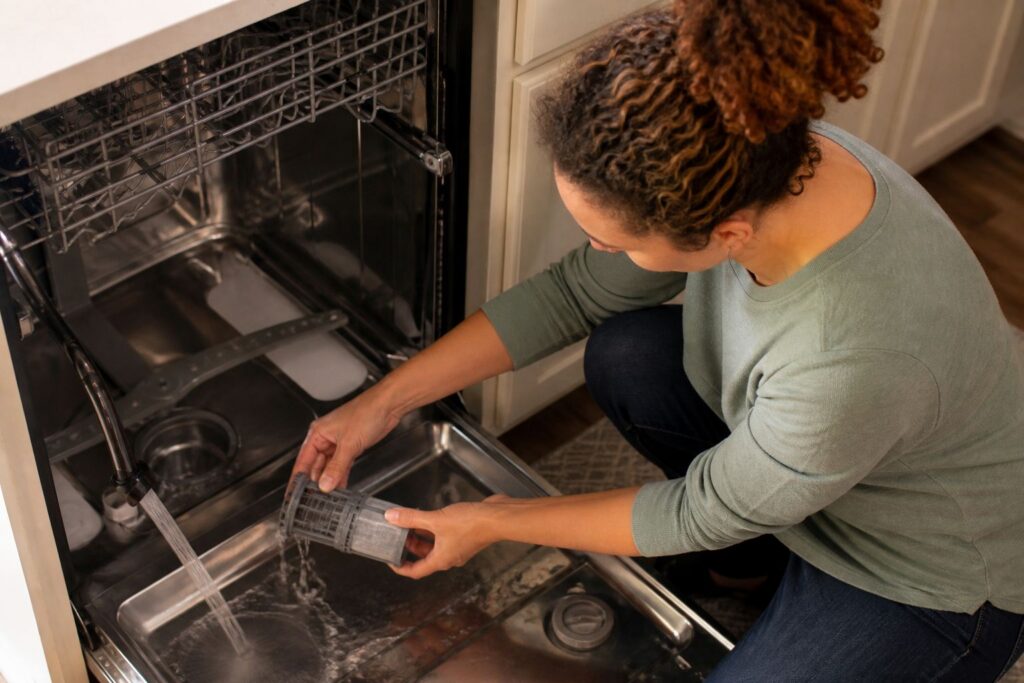
A clean filter supports good drainage and cleaning. Here is a safe routine.
Share a few details and we’ll confirm an appointment. Prefer to talk? Call us and we’ll help right away.
Use the secure scheduler below to request your appointment.