
Simple gasket, drawer, and drum care helps prevent musty odors in front-load washers.
Washer freshness depends on moisture and detergent, so wipe the door gasket, leave the door and dispenser open to dry, and use only the detergent type the manual calls for. A Bosch washer’s manual also describes a Drum Clean program, and the cause of a smell is more often residue than a failed part.
A front-load washer that smells stale does not point to any one failed part on its own. Start with observations that are safe and repeatable, which will also be handy should you later book a repair visit, and resist rushing just because laundry day has been disrupted.
Ordinary upkeep belongs in one group, and anything requiring tests or taking the washer apart in another. Do not work around a door lock, a safety switch or an error message to keep it running. A few quick notes made today make the later diagnosis faster and more precise.
After each load, wipe moisture and any visible debris off the door gasket, then prop the door and the dispenser drawer open a little so they can air out. Make the check with the washer in its normal place, and never force panels, fittings or controls. If a simple change affects the result, run one ordinary load before drawing conclusions. The dispenser drawer area deserves the same attention, since residue builds up there in a similar way.
A musty smell usually traces back to leftover detergent and moisture that cannot escape, more than to a broken part, particularly when cold washes and extra detergent are routine. Pay attention to whether it shows up every time, only with certain loads or settings, or after the washer has been going for a while. That tells you more than running the machine over and over.
| Task | How often | Benefit |
|---|---|---|
| Wipe the gasket | After each load | Cuts down moisture |
| Clean the drawer | Once a month | Holds residue in check |
| Run the drum-clean program | As the manual says | Freshens the drum |
The manual for one Bosch front-load washer says to use only high-efficiency detergent. Too much, or a non-HE product, causes suds, slow draining, foam from the dispenser drawer and an E:18 message, and too little can gray laundry and calcify the heating element. Overdosing is therefore not just a waste, it can build the residue that traps odors.
That manual also recommends running the Drum Clean program before the first load, because a small amount of factory test water can remain in the drum. Use the program name from your own manual and the product it recommends for it.
For controls, filter access and maintenance timing on your washer, read the use-and-care manual that belongs with it. Clean just the parts it labels as owner-serviceable, pick the cleaning products it recommends, and slot every removable piece back in the way it was designed to sit.
Ahead of the next wash, clear anything blocking the machine, cut down an exceptionally heavy load, and confirm that nothing restricts airflow, water supply or door clearance. Avoid pressing reset repeatedly; doing so can mask a fault that appears now and then and may leave water, heat or pressure in places it should not be. Interior vents are easy to block when a tall container is pushed against the back wall, so keep a small gap in front of them as you restock.
Bosch’s US support page on the washing machine seal says to wipe it with a soft damp cloth and to avoid abrasive and chlorine cleaners, which may degrade the rubber. Pay attention to the folds of the gasket, where lint, hair and moisture collect, and to the area where the gasket touches the door glass.
The same manual advises checking the drum for debris after each load, which is a quick look rather than a task. Coins, small items and fabric scraps can end up in the drain area and cause problems later.
Safe to try
Leave to a technician
If simple checks leave the symptom unchanged, hold back at the edge of owner-level work. Internal wiring, heating circuits, pumps, motors, refrigerant lines, gas lines and control boards depend on the right test equipment and on a technician who can verify that the repair is safe.
Book service soon if things are getting worse, a breaker trips, a leak appears near electrical parts, a hot or burnt smell is noticeable, a new grinding noise begins, or the washer cannot finish an ordinary cycle. If the appliance shows a safety warning, stop using it.
Tell the technician your model number, exactly what the washer does, when it started, what settings you chose and how the safe checks above went. A photo of a displayed code or a short description of a sound is useful too, but never take a cover off to get it.
Moisture trapped in the seal and drawer is a likely contributor, especially after cold washes and extra detergent. Wipe the gasket, dry it, and leave the door slightly open.
The Bosch US page says to avoid abrasive and chlorine cleaners on the seal. Follow your manual for which products are acceptable.
Note where the water collects, wipe the seal contact area and review how much detergent you use. If water keeps appearing, or the display shows an AquaStop-related code, shut off the water tap and arrange a visit rather than running more loads.
The table above says per manual, since the interval varies by model. Look up the recommendation for yours and keep it consistent.
Looking carefully cannot replace a repair, but it is the best place to start. Cover the simple conditions, keep any error details that might help, and leave electrical, gas, sealed-system and internal mechanical work with a qualified appliance technician.
Wipe moisture and visible debris from the door gasket after a load, then leave the door and dispenser slightly open to dry.
Only if there is no burning smell, smoke, sparking, gas odor, water near electricity, or other safety warning. Otherwise stop and arrange service.
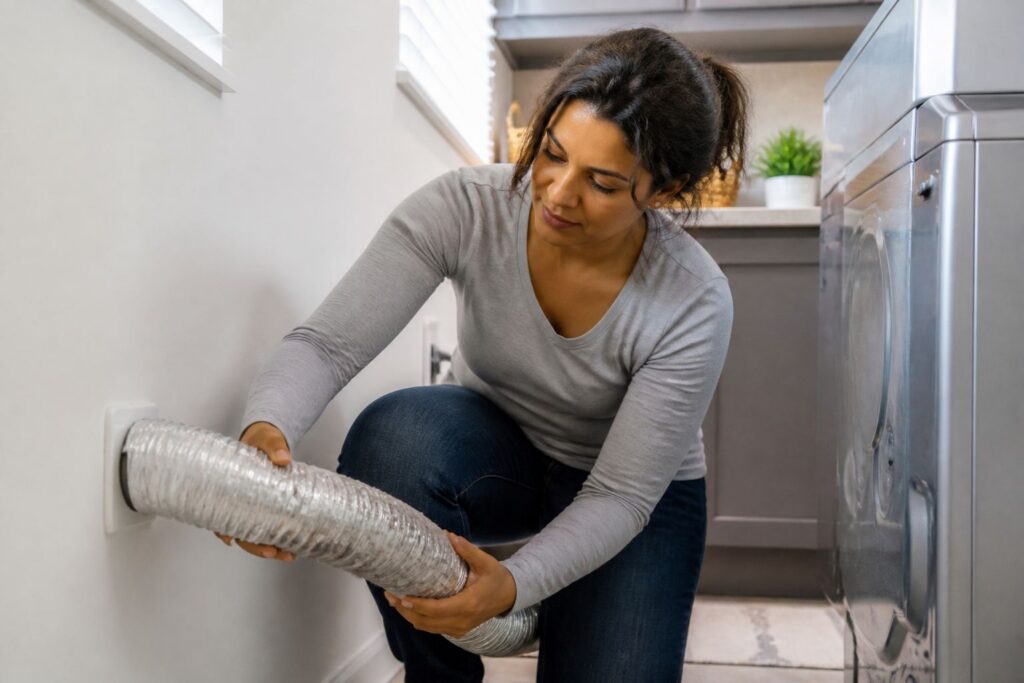
Clean venting improves drying performance and is an important home-safety habit.
Clear airflow and clean door seals help a refrigerator run efficiently.
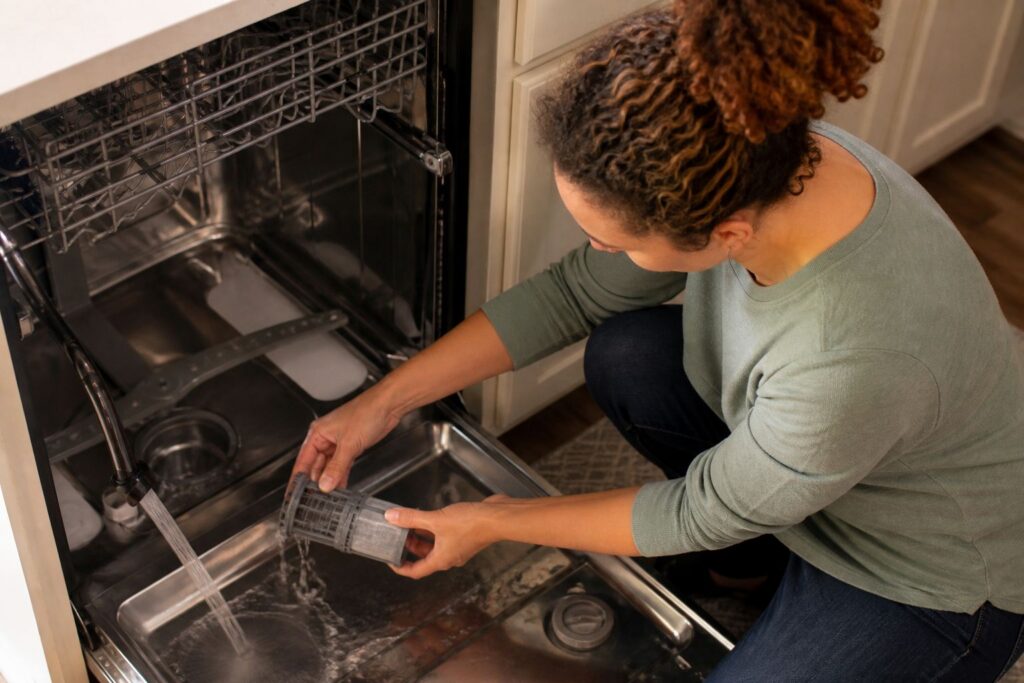
A clean filter supports good drainage and cleaning. Here is a safe routine.
Share a few details and we’ll confirm an appointment. Prefer to talk? Call us and we’ll help right away.
Use the secure scheduler below to request your appointment.