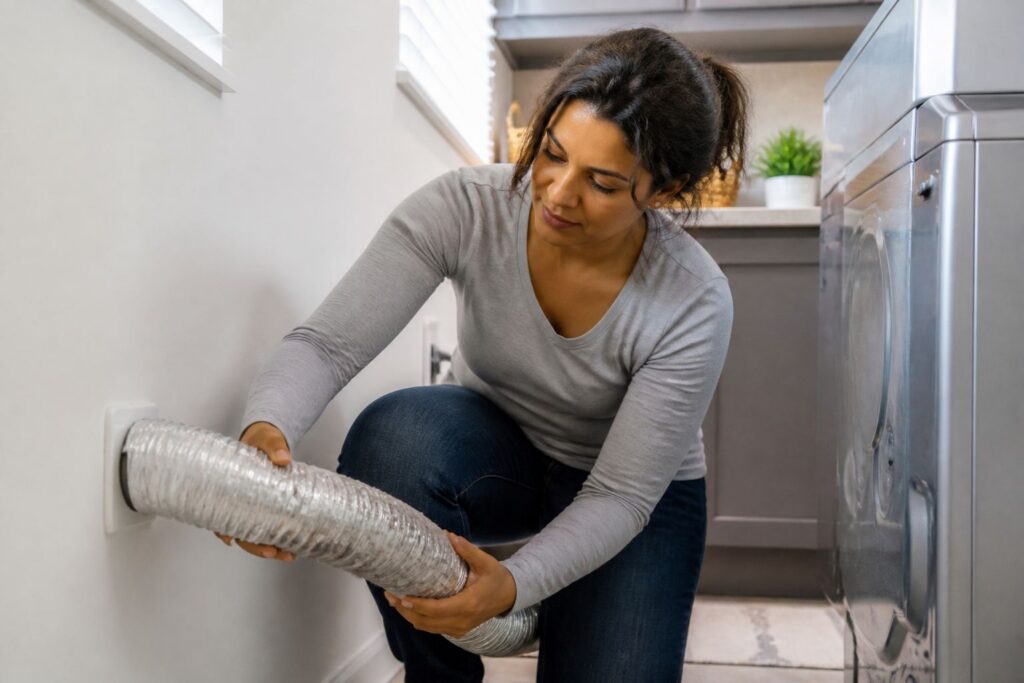

Small, safe habits — filters, seals, and descaling — help appliances run well for longer.
Bosch appliance maintenance is mostly a short list: dishwasher filters, door seals, the dryer lint filter and the manual-approved descaling or cleaning programs, done on a schedule. Choose one appliance at a time, follow its manual and avoid anything that requires removing panels.
Upkeep chores are easy to postpone because they compete with an already full household schedule. When a problem does appear, one symptom cannot name a failed part, so build the habit of safe, repeatable observations that will also help if you ever book a repair visit.
What follows keeps ordinary care apart from jobs that need testing or disassembly. Do not override a lock, safety switch or error message so a machine keeps running. Short notes taken along the way make any later diagnosis faster and more precise.
Work on one appliance per session and let its manual point out the filters, seals, trays and cleaning programs meant for owners. Keep the unit in its usual position and never force panels, fittings or controls. When a small change alters the result, run one normal cycle before concluding anything. A checklist taped inside a cabinet door keeps each interval where you can see it.
Upkeep pays off most when it happens before anything underperforms, so put recurring tasks on a calendar instead of waiting for an error to appear. Watch for patterns too: does a problem occur every time, only with a given load or setting, or once the machine has been running a while? That detail beats restarting the appliance again and again.
| Task | How often | Why it helps |
|---|---|---|
| Dishwasher filter rinse | Monthly | Water keeps draining |
| Door seal wipe-down | Monthly | The seal stays snug |
| Dryer lint screen cleared | After each load | Air keeps flowing |
Dishwasher: the manual for one Bosch model says to check the filters after each wash, and Bosch US support suggests cleaning the filter and spray arms every few months and using dishwasher cleaner and descaler a few times a year. Dryer: clean the lint filter before or after each drying process and, on the condensation model described, rinse the heat exchanger about once a month. Washer: wipe the seal with a soft damp cloth and avoid abrasive and chlorine cleaners.
These tasks share a pattern. Each removes something that restricts water, air or heat, and each is described in the manual with a method for that model.
Look up your exact model in its use-and-care manual to find where the filters sit, what the controls do and how often service is due. Clean only the parts it calls owner-serviceable, use just the cleaning products it names, and put each removable part back in the position it was designed for.
Prior to running one more cycle, clear whatever is in the way, cut down an unusually heavy load, and confirm that airflow, the water supply and door clearance are free. Repeated resets deserve caution because they can cover an intermittent fault and leave water, heat or pressure in the wrong place.
Refrigerator manuals give care items too. One says to rinse the ice cube box in warm water below 140 degrees F with no detergent and dry it fully, and a dispenser model counts down a water filter symbol from six months and says to change the cartridge at least every six months. Bosch US also advises discarding some water and a bin of ice after changing the filter.
For a built-in coffee machine, the manual says to clean the milk system manually every week or more even though it is steam-cleaned after each milk drink, and never to descale with vinegar or citric acid. For ovens, the manual for one model says the lower bake element is hidden under the oven bottom, so preheat can differ from an older oven. Use your own manual for any interval or product.
What owners can do
What a technician handles
When the basic checks leave the symptom as it was, stop at the edge of what owners can safely handle. Internal wiring, heaters, pumps, motors, boards, gas connections and refrigerant lines call for the right test equipment and a technician who can confirm the repair is safe.
Arrange a visit promptly if performance keeps declining, a breaker trips, water leaks near electrical parts, you notice a hot or burnt smell, a grinding sound is new, or a normal cycle will not complete. If a safety warning appears, do not keep the appliance running.
Keep notes short. A line per appliance with the date of the last filter, seal or vent cleaning is enough, and it lets you tell a technician what has already been done. Preventive care does not replace a repair, but it removes the common restrictions that can make a healthy machine look faulty.
Tell the technician the model number, the exact symptom, when it started, which settings were in use and how the safe checks turned out. A photo of a code or a quick description of a sound helps as well, as long as no cover comes off to get it.
Pick a day each month, work through the filters and seals in the table above and check the manual for anything else your models need.
Use the product your manual names. For one Bosch coffee machine, the manual says vinegar and citric acid should not be used.
No. The same manual forbids it for descaling the coffee machine, though a dryer manual mentions a little white vinegar on a cloth for the moisture sensor. Always follow the instruction for the specific part.
Paying attention is no replacement for repair, but it is the strongest first move. Handle the simple conditions, keep any helpful error details, and pass anything electrical, gas-related, sealed-system or mechanical on the inside to a qualified appliance technician.
Dishwasher not draining, not cleaning, or showing an error code? We find the cause and get your Bosch dishwasher back to spotless cycles.
Built-in or countertop Bosch coffee machine not brewing or leaking? We diagnose and restore a proper cup.
Bosch dishwasher diagnostics and repair — drainage, cleaning, leaks and error codes.
Bosch coffee machine diagnostics and repair — brewing, pressure, leaks and grinder faults.
Choose one appliance at a time and use its manual to identify the filters, seals, trays, and cleaning cycles intended for homeowner care.
Only if there is no burning smell, smoke, sparking, gas odor, water near electricity, or other safety warning. Otherwise stop and arrange service.
Clean venting improves drying performance and is an important home-safety habit.
Clear airflow and clean door seals help a refrigerator run efficiently.
Simple gasket, drawer, and drum care helps prevent musty odors in front-load washers.
Share a few details and we’ll confirm an appointment. Prefer to talk? Call us and we’ll help right away.
Use the secure scheduler below to request your appointment.